When Your Kubota Digger Key Needs Repair: A Practical Guide for UK Owners
There is a moment every mini digger owner knows. You turn the ignition switch and nothing happens. The dashboard stays dark, the engine does not crank, and you are left staring at a machine that suddenly feels more like a garden ornament than a piece of construction equipment. If you run a Kubota, that sinking feeling often comes with a specific worry: is the key itself the problem, or is something deeper wrong with the machine?
I have spent years around small excavators, and I can tell you that key trouble is far more common than most people expect. Keys get bent, transponder chips fail, lock cylinders wear out, and sometimes the key simply stops communicating with the machine's immobiliser. When you are stuck on a site with a deadline, knowing how to approach a Kubota digger key repair can save you hours of frustration and a lot of money.
How to Tell If Your Key Is the Problem
The first step is diagnosis. Before you call a Kubota dealer or start ordering parts, you need to rule out the obvious. Check the battery, the fuel level, and the emergency start procedure if your machine has one. Many modern Kubota mini diggers include an emergency start override that bypasses the transponder system. If the engine fires up with that override, you almost certainly have a key or immobiliser issue.
If the emergency start does nothing, the problem might be the ignition switch or a wiring fault. But if the machine cranks but refuses to start, or if the immobiliser light flashes in a pattern you have not seen before, the key is the prime suspect. This is where understanding the difference between a mechanical key failure and an electronic one becomes important.
Mechanical failure is usually obvious. A bent key blank that no longer turns smoothly, worn teeth that slip inside the lock cylinder, or a key that snaps off in the ignition. Electronic failure is trickier. A transponder key might stop working because the chip inside has been damaged by water, heat, or repeated drops. Sometimes the chip simply fails with age. If your Kubota digger key repair needs go beyond a simple cut, you are looking at reprogramming or replacement.

What Kubota Digger Key Repair Actually Involves
When people search for "Kubota digger key repair", they often imagine a straightforward fix. In reality, the process depends heavily on the model and the year of the machine. Older Kubota mini diggers often use basic metal keys with no electronics. For those, a key cutting service that matches the key code stamped on the lock cylinder or the original key is all you need. The repair is simply a matter of getting a fresh key blank cut to the correct profile.
Newer machines are a different story. Many Kubota models from the mid-2000s onward use a transponder key system. The key contains a small chip that communicates with the machine's ECU. Without the correct chip signal, the engine will not start, even if the key turns perfectly in the ignition switch. A proper Kubota digger key repair for these machines involves both key cutting and key programming. You need a key blank that matches the physical profile and a chip that can be programmed to match your machine's immobiliser code.
This is not something you can do with a file and a bit of patience. Transponder key programming requires specialist equipment that reads and writes the data to the chip. Some Kubota dealers can do it, but they often charge a premium and may require you to bring the machine to them. That is not always practical when you are working on a site miles from the nearest dealership.
Replacement Keys vs Repairing the Original
If your original key is damaged but still partially functional, you might wonder whether to repair it or start fresh. In my experience, repairing a broken key is rarely worth the effort. A snapped key can sometimes be extracted from the lock cylinder, but the key itself is usually beyond saving. A bent key can be straightened in a pinch, but it will never sit as cleanly in the ignition, and it risks further damage to the lock cylinder over time.
The smarter move is to get a replacement key. A key replacement service that provides a correctly cut key blank and handles the key programming if needed will give you a fresh start. Many UK specialists, including kubotakeys.co.uk, offer a postal service where you send them a copy of your existing key or provide the key code, and they return a working replacement within a few days. For most mini digger owners, that is the most practical route.
One thing to watch out for is the difference between OEM parts and aftermarket alternatives. An OEM part from Kubota will cost more but guarantees compatibility. Aftermarket key blanks can work just as well, provided they are made to the correct specifications. I have seen cheap blanks that wear down quickly or have poor transponder chip quality. If you rely on your machine daily, it is worth spending a little more on a reliable key.
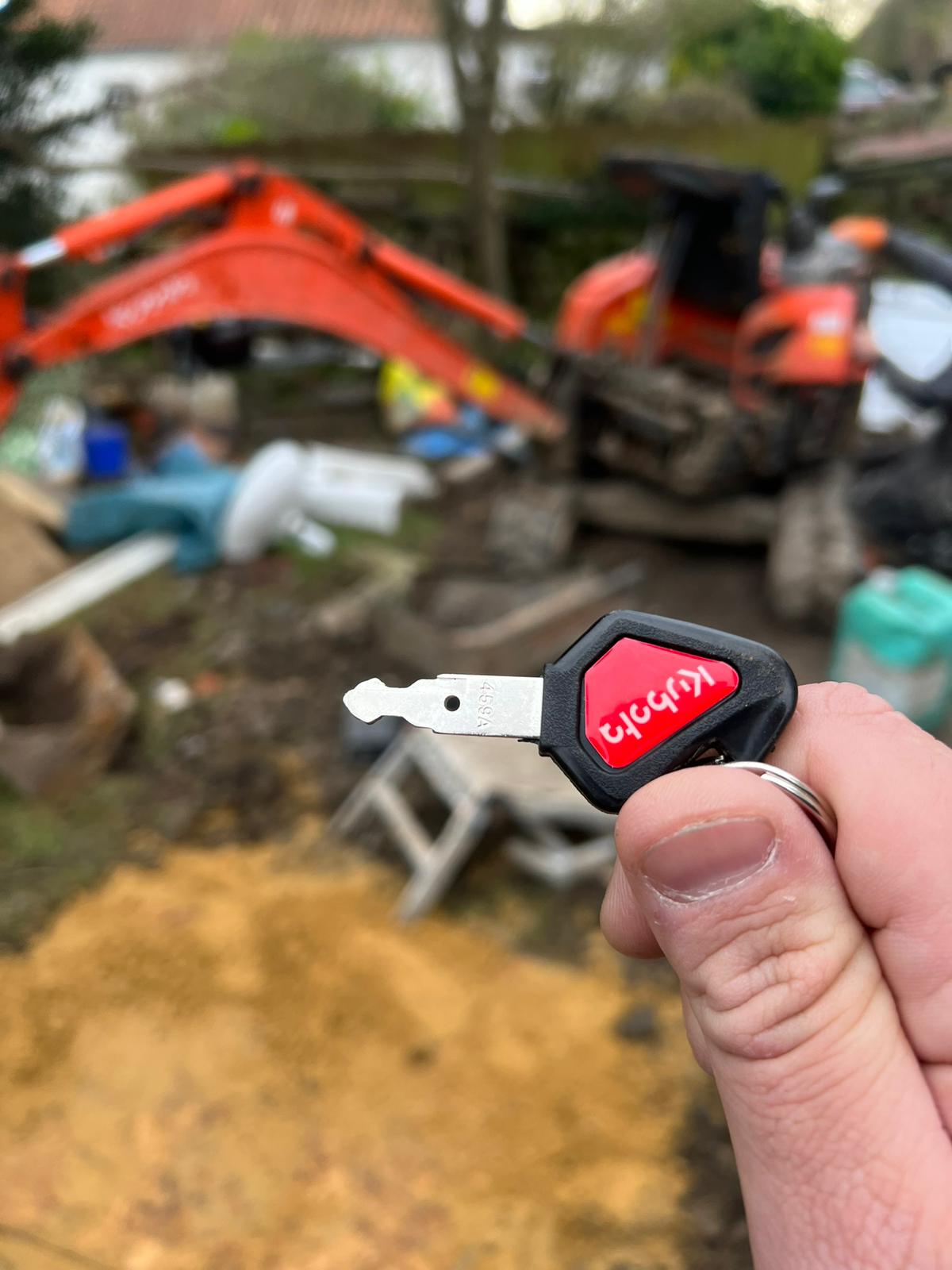
Key Duplication and the Importance of Spares
Once you have a working key, getting a duplicate is a no-brainer. Key duplication for a Kubota mini digger is straightforward if you have the original. A key cutting service can produce a spare from the physical key or from the key code. If your machine uses a transponder key, the duplicate will also need key programming. Having a spare key saves you from being stranded if the original is lost or damaged.
I keep a spare for every machine I own, and I store it somewhere separate from the main key. If you only have one key and it fails, you are looking at a much more complicated situation. You might need to replace the entire ignition switch and lock cylinder, or have a new key cut from the lock code, which is not always easy to find on older machines.
When the Lock Cylinder Is the Real Problem
Sometimes the key is fine, but the lock cylinder has worn out. This is especially common on machines that have seen years of use with a key that was slightly bent or worn. The pins inside the cylinder can wear unevenly, making it hard to turn the key or causing it to stick. If your key goes in but will not turn, or if it turns but does not engage the ignition switch properly, the lock cylinder may need replacing.
In those cases, a Kubota digger key repair might involve replacing the cylinder and getting new keys cut to match the new lock. Some specialists can rekey the cylinder to work with your existing keys, but that is a more involved job. If you are replacing the cylinder anyway, it is often simpler to get a new set of keys with it.
Practical Steps for UK Owners
If you are based in the UK and need a replacement Kubota key, here is what I recommend:
- Check your machine for a key code. It is often stamped on the lock cylinder or printed in the owner's manual. This code lets a key cutting service produce a new key without needing the original.
- If the key has a transponder chip, note the model and year of your machine. Different Kubota models use different chip types, and the programming process varies.
- Consider using a specialist key replacement service like those found at kubotakeys.co.uk. They handle both key cutting and key programming, and they offer UK delivery. You avoid the hassle of travelling to a dealer.
- Order a spare at the same time. Duplication is cheaper when you already have a working key to copy.
- Test the new key immediately. Try it in the ignition switch and confirm the engine starts. If you ordered a transponder key, make sure the immobiliser recognises it.
Final Thoughts on Kubota Digger Key Repair
Key trouble on a mini digger is one of those problems that feels bigger than it actually is. With the right approach, most issues can be resolved in a few days and at a reasonable cost. The key is understanding whether you need a simple cut, a full replacement with key programming, or an ignition system overhaul.
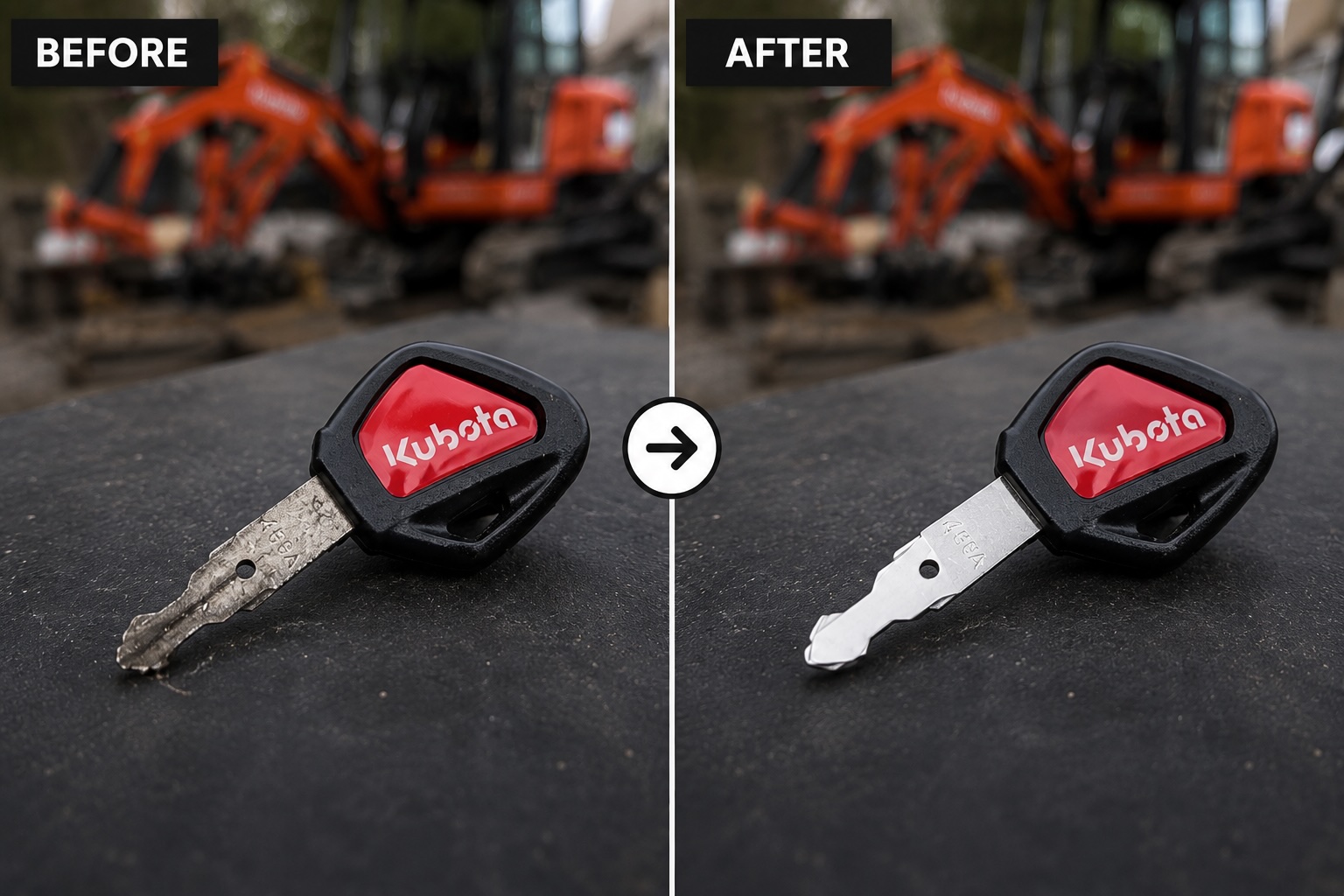
If you take one thing from this article, let it be this: do not wait until you are stuck on site. Sort out a spare key now, know your machine's key code, and keep the contact details of a reliable key replacement service handy. That small bit of preparation can turn a potential day of downtime into a ten-minute fix.
Whether you end up needing a basic key duplication or a full Kubota digger key repair with programming, the process is manageable if you know where to start. And if you ever find yourself staring at a silent machine with a key that will not cooperate, remember that the problem is rarely as bad as it first appears.